Introduction
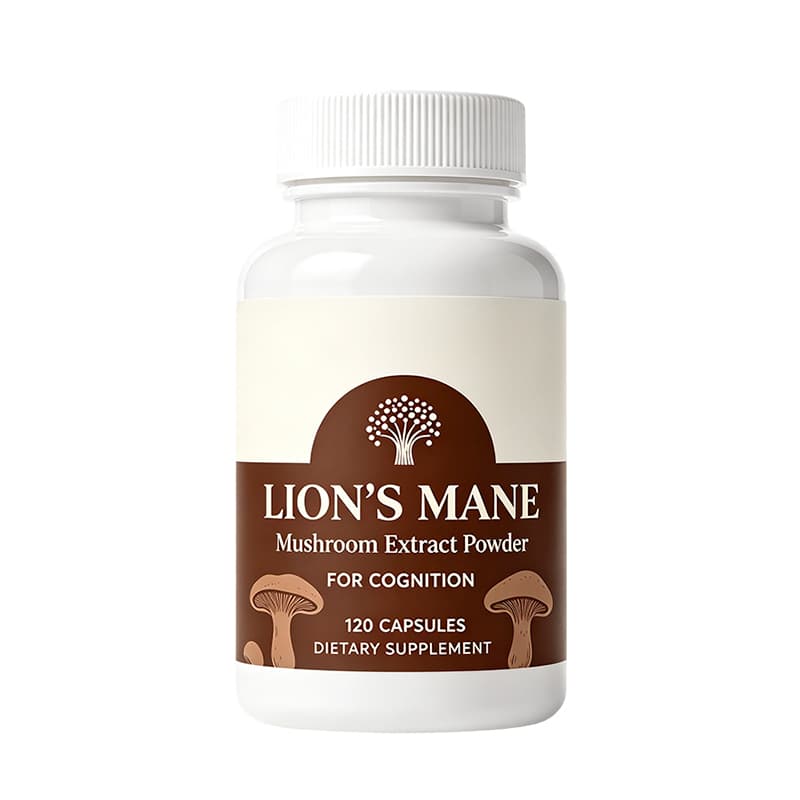
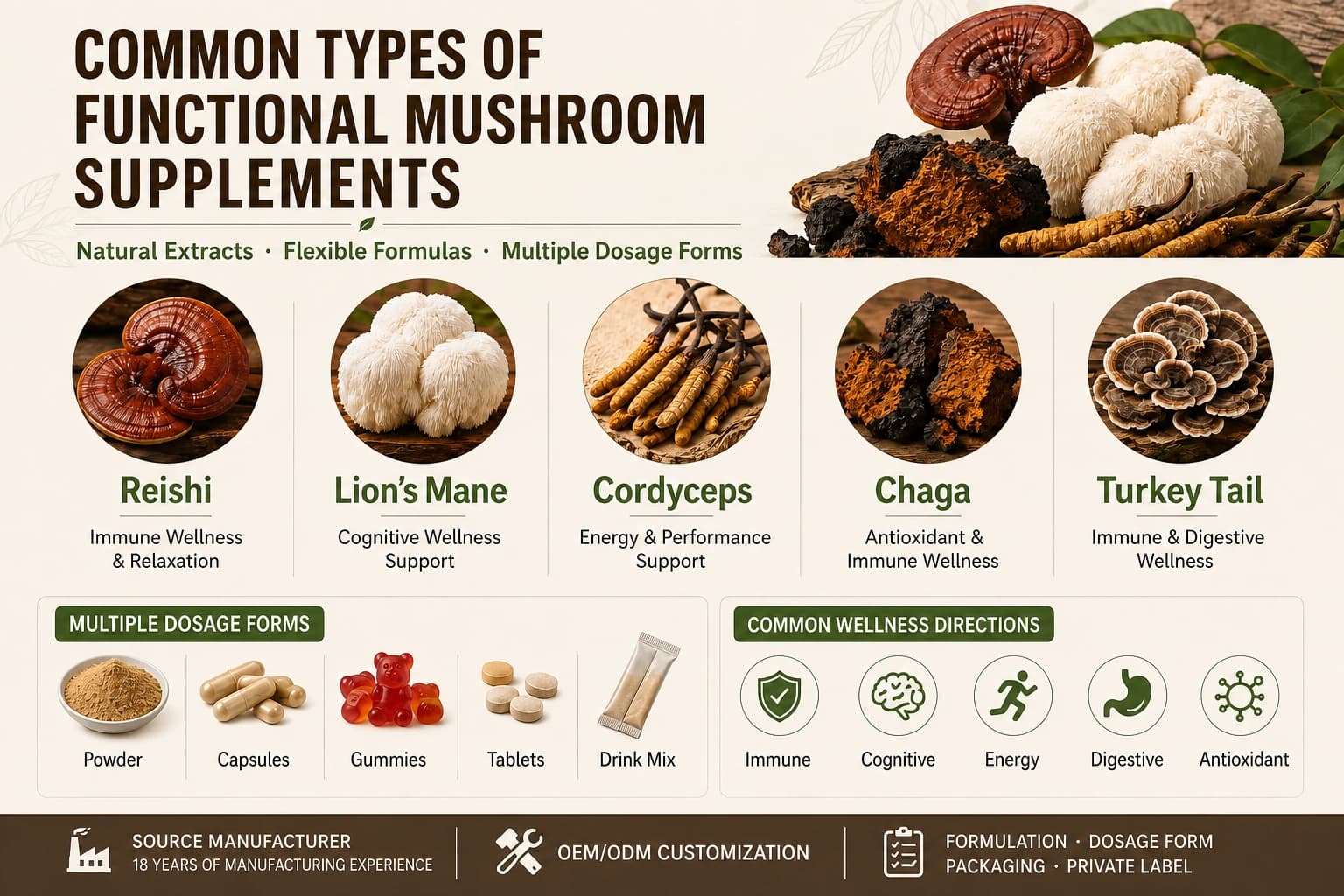
Functional mushrooms have become an increasingly visible category in the global dietary supplement market. Across North America, Europe and Asia, brands are expanding product directions around reishi, lion's mane, cordyceps, chaga and turkey tail.
These ingredients are now used in powders, hard capsules, gummies, tablets and functional drink mixes. Their continued popularity reflects broader interest in natural nutrition, plant-based ingredients, clean-label concepts and more personalized supplement formats.
1. Growing demand for natural wellness products
Consumers increasingly look for supplements made with familiar natural ingredients and straightforward label directions. Functional mushrooms fit this demand through their natural origin, sustainable sourcing potential and flexibility in single-ingredient or blended formulations.
Common market positioning includes immune wellness, cognitive wellness, energy support, digestive wellness, relaxation and antioxidant support. Final ingredient amounts, label language and claims still need to be reviewed for the intended market and confirmed product specification.
2. Multi-ingredient mushroom complex formulas are expanding
Many brands are moving beyond one-mushroom concepts toward mushroom complex formulas. Reishi, lion's mane, cordyceps, chaga and turkey tail may be combined with vitamins, minerals, probiotics, beta-glucans or other botanical ingredients to create broader all-in-one product directions.
A multi-ingredient concept needs structured formulation review. Ingredient compatibility, extract specification, serving size, taste, moisture sensitivity, stability and target-market label requirements should be organized before sample development.
3. Multiple dosage forms help brands reach wider audiences
Different delivery formats serve different usage occasions and channel strategies:
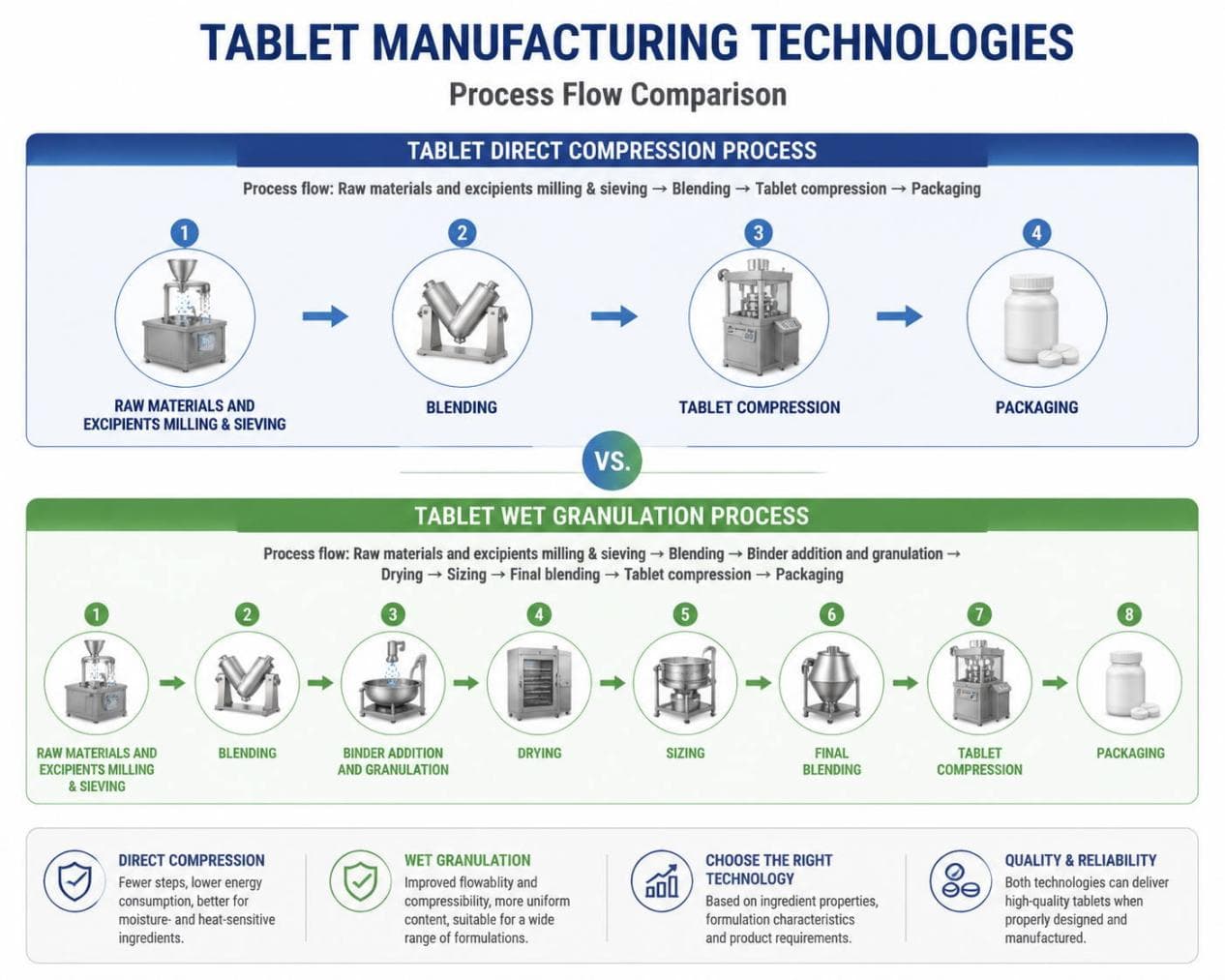
Powders for coffee blends, smoothies and drink mixes · Hard capsules for precise daily use · Gummies for taste-led and convenient formats · Tablets for concentrated and economical concepts · Sachets for portable drink-mix projects
The preferred format depends on the formula, serving plan, target consumer, packaging system, quantity range and intended sales channel. Early dosage-form review helps avoid unnecessary reformulation later in the project.
4. OEM and private label opportunities continue to expand
As competition grows, more supplement brands choose experienced OEM/ODM support instead of building production capability from the ground up. A coordinated project can connect custom formulation, ingredient sourcing, manufacturing, packaging, labeling and private label preparation.
Bodakang Bio is a source manufacturer with 18 years of manufacturing experience. Project capabilities cover softgels, hard capsules, tablets and powder formulations, with flexible customization for functional mushroom blends, botanical extracts, dosage forms and packaging directions.
Buyers can prepare a faster first discussion by confirming the destination market, mushroom ingredients or extract ratios, preferred dosage form, serving direction, annual volume, packaging format and required project documents.
Conclusion
Natural wellness, multi-ingredient formulas, clean-label positioning and convenient dosage forms are likely to remain important themes in functional mushroom supplement projects. Brands that connect a clear market brief with formulation, manufacturing and packaging planning can move toward sampling and quotation with fewer unresolved variables.