Introduction
A herbal supplement quotation can look complete while leaving the most important ingredient decisions unresolved. Two suppliers may quote the same botanical name and capsule weight but offer different plant parts, extract compositions or testing scopes.
Choose a herbal supplement contract manufacturer that can connect the proposed ingredient to a written specification, explain how its identity and quality will be checked, and confirm who owns each production and market-entry decision. Price becomes useful once those details are comparable.
This guide focuses on purchasing and supplier evaluation. It does not prescribe consumer doses or certify that a particular botanical is permitted in a destination market.
1. Define the ingredient before requesting a comparable price
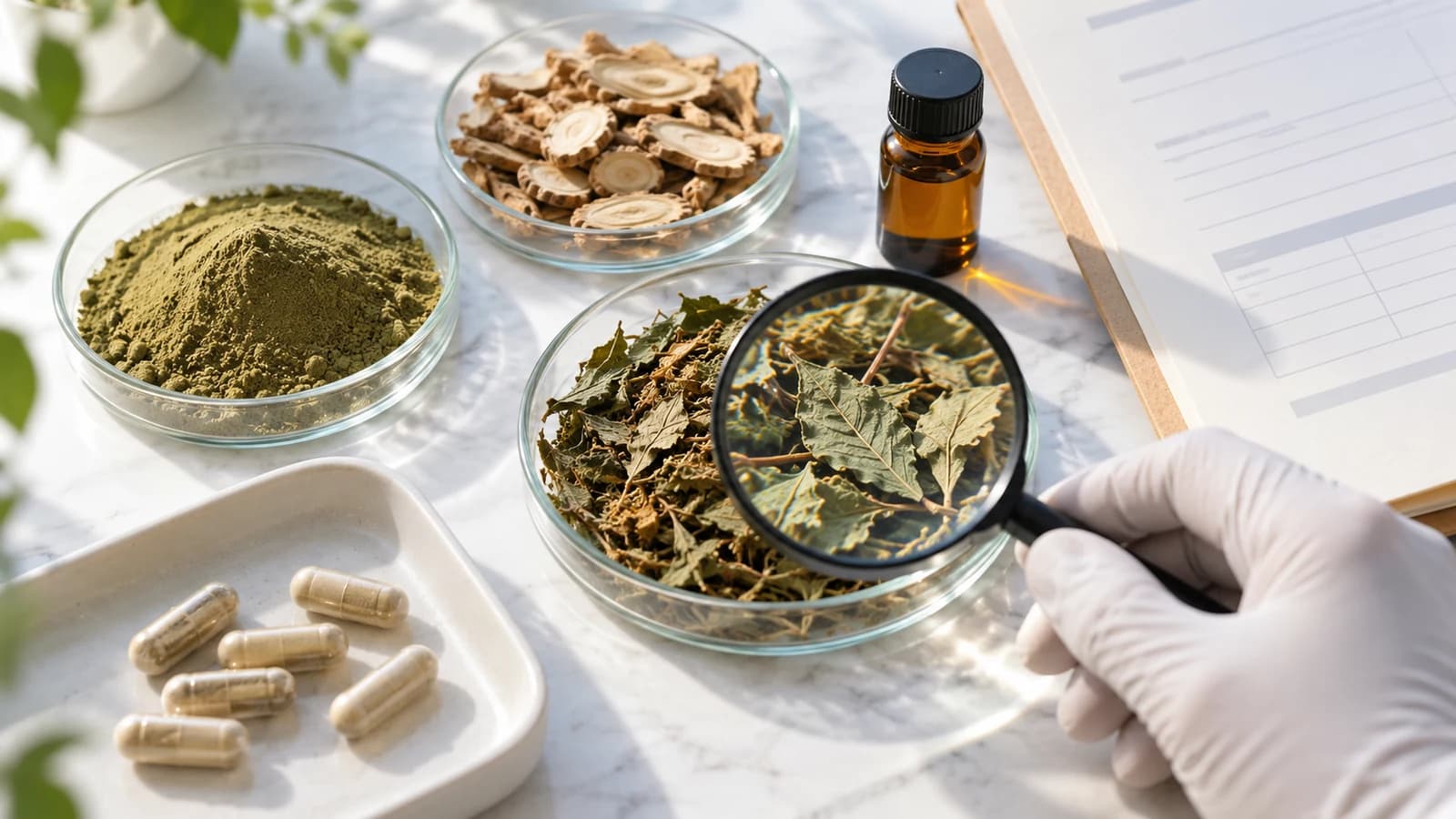
A common plant name is a starting point. Ask each shortlisted manufacturer to complete the same ingredient specification:
| Item to define | What to request from the supplier |
|---|---|
| Botanical identity | Scientific name and plant part; clarify any naming ambiguity |
| Material form | Whole or milled botanical, extract, or another preparation |
| Extract composition | Extraction solvent, declared ratio and its definition, and any carriers or other excipients |
| Standardization | Named marker or constituent, acceptance range, reporting basis and analytical method, where applicable |
| Serving design | Amount per unit, units per serving and proposed daily serving |
| Supply traceability | Ingredient supplier, manufacturing source and lot identification |
| Commercial specification | Dosage form, pack count, quantity range and destination market |
Avoid treating an extraction ratio as a complete quality specification. If a quotation says “10:1,” ask what the two numbers describe and whether the declared extract includes carriers. Then review the identity and constituent information separately.
For a purely arithmetic illustration, 100 mg of an extract specified at 5% of a named marker corresponds to a nominal 5 mg of that marker on the stated reporting basis. This is not proof of clinical effect or equivalence to a different extract. A comparison still needs matching definitions and test methods.
2. Ask how the material's identity will be verified
Request an explanation of the identity method used for the actual material being purchased. A method suited to a recognizable dried leaf may not answer the same questions for a processed extract.
The manufacturer's quality team should explain why the method is appropriate, what reference material or specification is used, and how an unexpected result is handled. Ask who reviews the result and whether the ingredient remains on hold until approval.
For projects within the scope of the U.S. dietary supplement CGMP rule, FDA explains that each dietary ingredient requires an appropriate identity test or examination, unless FDA grants a petitioned exemption. Supplier certificates of analysis do not erase that requirement. This is a U.S.-specific regulatory example, not an ASEAN-wide rule. See FDA's dietary supplement CGMP guide. [1]
Use the answer to evaluate the supplier's reasoning. “We receive a COA” should lead to further questions about incoming controls, supplier qualification and batch acceptance.
3. Review a relevant COA and the proposed testing plan
Ask for an appropriately redacted example relating to the proposed ingredient or product. An unrelated sample report may show the document format but cannot establish the quality of your future batch.
Check that the certificate of analysis identifies the material and lot, lists the applicable specifications, reports results clearly, and identifies the methods or method references. Distinguish raw-material results from finished-product results.
Then ask the manufacturer to propose a testing plan for the specific formula. Topics to discuss include identity, relevant constituent measurements, microbiological quality, heavy metals, and other risks associated with the ingredient and process. Pesticides, mycotoxins, residual extraction solvents or adulteration screening may require additional consideration rather than a universal test panel.
WHO's Quality control methods for herbal materials, published in 2011, describes approaches to herbal-material quality assessment, including contaminants. It is a technical reference; it does not establish that a finished supplement is approved for sale in a particular country. [2]
Before approving a quotation, clarify which tests are included, which are additional, which laboratory will perform them, and what happens if a result does not meet the agreed specification.
4. Confirm that the dosage form fits the proposed formula
Do not choose a format solely because a competitor sells it. Ask for a feasibility review of your own ingredient specifications and serving plan.
For hard capsules, discuss fill volume, powder flow, shell requirements and the number of capsules per serving. A target weight alone does not establish that a blend will fit the selected capsule size.
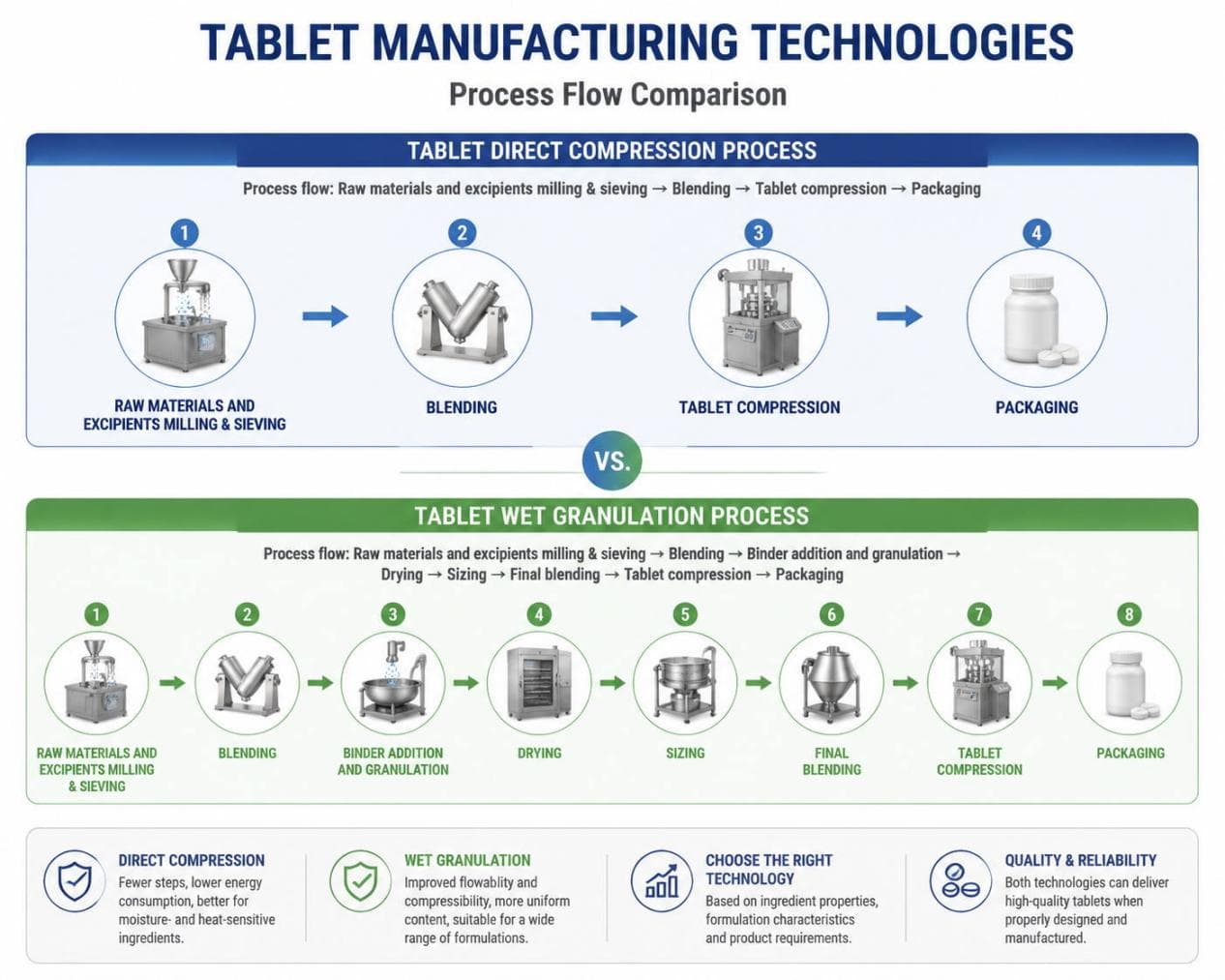
For tablets, ask how the manufacturer will evaluate compression behavior, proposed excipients, unit size and relevant physical performance. Any process change should be assessed against the agreed ingredient and product specifications.
For powders, discuss whether the product is intended to dissolve or disperse, how bitterness or sediment will be evaluated, and how serving size and moisture protection affect the pack.
If a softgel is proposed, request a review of fill suitability and shell compatibility. A dry botanical extract does not automatically become a feasible softgel fill.
Define what a development sample is meant to demonstrate. Appearance and handling observations can help refine the brief; they do not replace the evidence required to release a commercial batch. For capsule-specific planning, see our hard capsule OEM/ODM guide.
5. Check the manufacturing site and quality responsibilities
Establish which legal entity will manufacture, which site will perform the work, and whether any processing, testing or packing is subcontracted. The sales contact should be able to identify the responsible quality contact.
When reviewing a licence or certification, check its holder, site address, scope, validity and issuing body. Ask how it relates to your proposed product and process. A certificate image alone does not demonstrate that every formula or destination requirement is covered.
Request a clear description of batch traceability, production-record review, release responsibility, complaint handling and change control. For confidential records, agree on suitable redaction or an audit arrangement rather than requesting other customers' formulas.
Record who must approve changes to ingredient source, extract specification, excipients, processing or packaging. A cheaper substitute should not enter the project without the agreed review.
6. Resolve destination classification before finalizing claims and artwork
Confirm the intended market and sales channel early. The product's ingredients, format and presentation may affect its classification. A manufacturer's export experience cannot substitute for reviewing the actual product.
Singapore: HSA states that health supplements are not subject to HSA pre-market approvals and licensing for import, manufacture and sale, while dealers remain responsible for safety and applicable standards. This does not mean every herbal preparation qualifies as a health supplement. HSA provides classification guidance and prohibits health-supplement claims for treating or preventing disease. [3]
Indonesia: BPOM's registration services distinguish health supplements from natural medicines. Ask the local responsible partner to confirm the route for the proposed formula and presentation. [4]
Thailand: Thai FDA publishes dedicated herbal-product rules, including importation and labelling provisions. Confirm the applicable category before assuming a supplement or herbal-product pathway. [5]
These are market-specific signposts checked on 9 October 2026, not a product approval assessment. Have the responsible local partner confirm ingredients, serving, claims, label language and required documents before artwork approval. If Halal is part of the brief, specify the destination and review evidence covering the relevant ingredients, shell, processing and production scope; “plant-based” is not sufficient evidence by itself.
7. Compare the whole quotation, including packaging and release
Send the same brief to each supplier and request a quotation with assumptions and exclusions. Compare:
- The exact botanical or extract specification and serving design.
- Dosage form, excipients and packaging components.
- Included sample work, testing and document preparation.
- Ingredient, manufacturing and packaging minimum quantities.
- Timing dependencies: material availability, sample approval, artwork, testing and production scheduling.
- Shipment terms and the responsibilities of the buyer and manufacturer.
For packaging, ask how the proposed bottle, blister or pouch will be evaluated for the product's storage and distribution conditions. Clarify the basis for the proposed shelf life and whether supporting work relates to the final formula and pack.
Do not compare a bulk-capsule price with a quotation for tested, labelled retail bottles. Separate one-time development costs from repeat-order costs, and request written confirmation of any open assumptions. No single MOQ or lead time should be assumed for every herbal formula.
8. Make the supplier decision around unresolved evidence
Shortlist a manufacturer when it can define the ingredient, explain suitable controls, review the dosage form and provide a written project scope. Resolve gaps before approving the affected stage.
Pause a decision when the supplier cannot identify the plant part, explain the extract specification, relate evidence to the proposed material, or identify the manufacturing site. Treat promises of guaranteed market approval as a reason to ask for the exact basis and responsible party.
A useful selection record is a short list of confirmed specifications, open questions, assigned owners and approval conditions. It makes the first order easier to manage and gives repeat orders a documented reference.
Buyer questions
Is a standardized extract always the better option?
No. Standardization can make a specified constituent easier to compare, but selection still depends on identity, composition, the purpose of the specification, supporting evidence and the destination requirements. A marker percentage alone is not a complete quality or efficacy assessment.
Does a finished-product COA replace ingredient qualification?
No. They answer different questions. Ask how the manufacturer qualifies the ingredient and how the finished batch is assessed against its own specifications. Agree the testing scope and release responsibilities before production.
Can I request a quotation before the formula is final?
Yes. Label it as a preliminary brief and identify the open decisions. Request the assumptions behind the estimate and the information needed for a firm quotation. Our OEM, ODM and CDMO buyer guide can help define the development scope.
Discuss your herbal supplement project with Bodakang Bio
Send your botanical or extract specification, preferred dosage form, intended serving, target market, estimated quantity and packaging preference. If some details are undecided, identify them in the brief so the discussion can focus on the next decisions.
Request a herbal supplement project review. Feasibility, available documents, sample scope, MOQ and timing require confirmation for the individual project. You can also review our OEM/ODM services and quality information.
Sources and scope
Sources checked on 9 October 2026. The supplier questions and comparison steps are editorial procurement recommendations. Regulatory statements apply only to the identified jurisdiction and product category; they do not establish approval for a particular formula.
- U.S. FDA — Small Entity Compliance Guide: Dietary Supplement CGMP. December 2010 guidance; consulted for dietary-ingredient identity and supplier-COA controls under 21 CFR Part 111. U.S. scope.
- WHO — Quality control methods for herbal materials. Published 5 June 2011, ISBN 9789241500739. Technical herbal-material quality reference, not a finished-supplement market-entry rule. Publication metadata and indexed PDF content were accessible; the direct PDF download was restricted during this check.
- Singapore HSA — Regulatory overview of health supplements. Page rechecked on 9 October 2026; consulted for classification, dealer responsibility and claims boundaries. Singapore health-supplement scope.
- Indonesia BPOM — Registration services: OTSKK. Live service page checked 9 October 2026; consulted only for distinct health-supplement and natural-medicine routes. No registration timeline or product eligibility is asserted here.
- Thai FDA — Herbal products: official regulatory documents. Live document index checked 9 October 2026; consulted as a classification and regulatory-review signpost, not as a formula approval.