Introduction
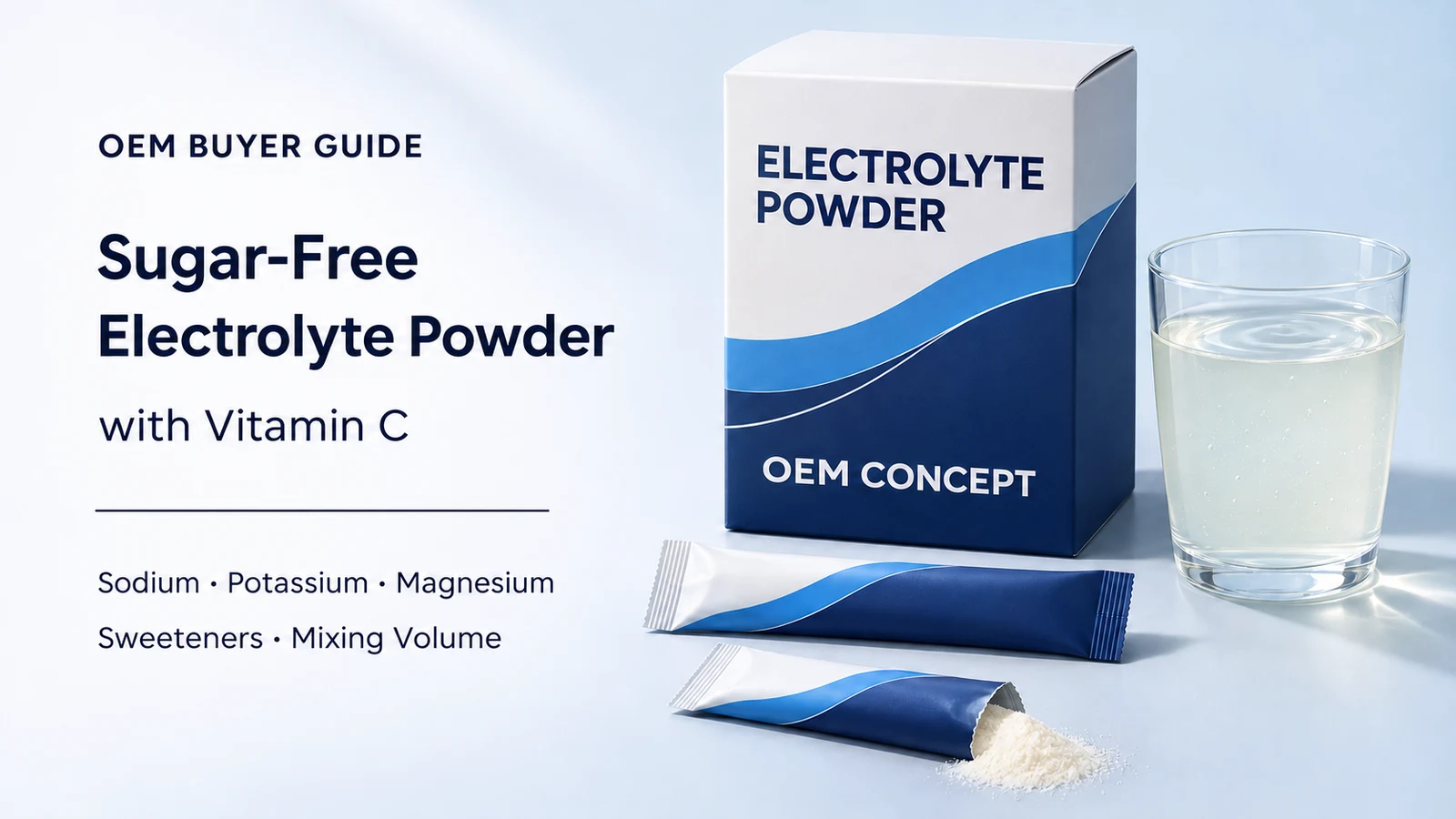
Give your OEM manufacturer one defined powder serving, a mixing water volume, and separate per-serving targets for sodium, potassium, magnesium and vitamin C. Then specify the sweetness you want, the ingredients you will accept, and the exact sugar claim you intend to use in the destination market. With those inputs, suppliers can quote against the same brief and you can compare samples as prepared for the customer.
Bodakang Bio accepts inquiries for vitamin C electrolyte powder as an oral supplement project. The formula, sugar claim, sample scope and commercial terms are agreed for each project. This brief is for a retail drink powder. Keep medical oral rehydration salts outside the scope of this product brief.
Put the serving and the four nutrient targets on one sheet
Separate the total powder fill in grams, each declared nutrient in milligrams per serving, and the mixing water in milliliters. If one sachet is one serving, write that explicitly. If a scoop is planned, state the proposed gram weight and ask the supplier to check the scoop against the blend. A quote for a larger fill or a two-stick serving can look comparable until the numbers are put on the same basis.
| Brief field | What to send | What to ask the supplier to return |
|---|---|---|
| Market and label | Destination country, sales channel, proposed category and claim wording | Review owner and any inputs still needed before artwork |
| Serving and preparation | One stick or scoop per serving, target fill in g, and water in mL | Proposed fill, mixing directions and any differences from the brief |
| Sodium, potassium and magnesium | Separate elemental mg targets per serving, with required or flexible ranges | Ingredient forms, each mineral's contribution and proposed per-serving totals |
| Vitamin C | Declared mg per serving and any ingredient preference | Source form, declared amount and proposed evidence for the intended shelf life |
| Sweetness and flavor | Flavor target, sweetness level, approved options and exclusions | Sweeteners, carriers, flavor ingredients relevant to the claim and any substitutions |
| Quote and samples | Pack format, estimated first-order volume, sample scope and target launch window | Quote basis, assumptions, exclusions, and sample fee and timing if available |
In the mineral rows, ask for the amount of the mineral itself. For example, a line that says “magnesium citrate 100 mg” gives the mass of a source ingredient. Ask separately how much magnesium that ingredient contributes. If a nutrient comes from more than one ingredient, ask the supplier to sum all contributions. For vitamin C, ask for the declared amount and identify the source form separately, such as ascorbic acid or calcium ascorbate.
Use the same mixing volume to compare samples
Record both the amount in the powder serving and the concentration in the prepared drink. To compare concentrations, multiply the nutrient amount per serving by 100 and divide by the prepared drink volume in milliliters. For a quick comparison, use the specified water volume as an estimate of the final volume. A hypothetical serving containing 240 mg of sodium gives approximately 60 mg per 100 mL with 400 mL of water and 40 mg per 100 mL with 600 mL. The serving still contains 240 mg in either case. These figures illustrate the calculation.
Choose one mixing volume before the first sampling round. If the consumer will use a standard bottle, record its size in the brief. If you want to offer a preparation range on the label, evaluate the low and high ends in addition to your main comparison volume. Use the same water source, starting temperature, mixing method and time for each sample. Record visible residue, perceived saltiness, sweetness and aftertaste. If one option tastes better only with extra water, record the change and decide which directions you want to use before requesting a revision.
Give sweetness and the sugar claim separate sign-offs
Tell the manufacturer how sweet the drink should taste and which sweeteners or blends the brand will consider. Ask for the full sweetening and flavor system, including carriers where they matter for claim review. A prototype can meet the flavor brief while the ingredient documentation or claim evidence is still incomplete.
Review “sugar free” and “no added sugar” as separate claims. Confirm the destination, product category, permitted ingredients, declaration basis and evidence required for the exact wording. Review the whole finished formula, including flavor and premix inputs, before approving print. For vitamin C, ask how the proposed declared amount will be supported over the intended shelf life in the selected package. Keep a sensory sample approval separate from nutrient verification and artwork approval.
Make the quote comparable before choosing a supplier
Send the same brief version to each supplier. Ask them to mark each row as agreed, proposed with a change, or awaiting information. Record the actual sample code, formula revision and preparation settings against their reply. If the mineral source or sweetener changes between sampling and quotation, ask for a revised specification and decide whether a fresh sample is needed. The powder supplement OEM page provides context for discussing powder format and packaging alongside the formula.
Buyer questions
What if I have no target for one of the minerals?
Mark it as open and ask the supplier for a proposal that fits your use case, flavor and water volume. Keep any target already set by your brand in a separate field so the quote makes the proposed changes visible.
Can I compare prototypes mixed in different amounts of water?
You can calculate concentrations at their respective mixing volumes. For taste and mixing performance, make a second comparison using the same water volume and method so the panel can assess the prototypes under matching conditions.
Can a 0 g sugars entry settle the front-label claim?
Ask your label reviewer to evaluate the finished formula and applicable rules for the destination and category. Bring the exact claim wording, serving basis, full ingredient list and supporting composition evidence to that review.
What should I send to request a sample or quotation?
Send the destination, proposed serving and water volume, four nutrient targets, flavor and sweetness preferences, pack format and estimated order volume. Send your electrolyte powder brief to Bodakang Bio and identify which choices are fixed and which you want the project team to propose.